I just returned from a three-day loop on the Lakeland Canoe Circuit in northeastern Alberta—a stunning, remote, and often underappreciated backcountry canoe route. It’s Alberta’s only official canoe circuit, and while it offers a good mix of challenge and serenity, let’s just say it could use a little love in a few spots.
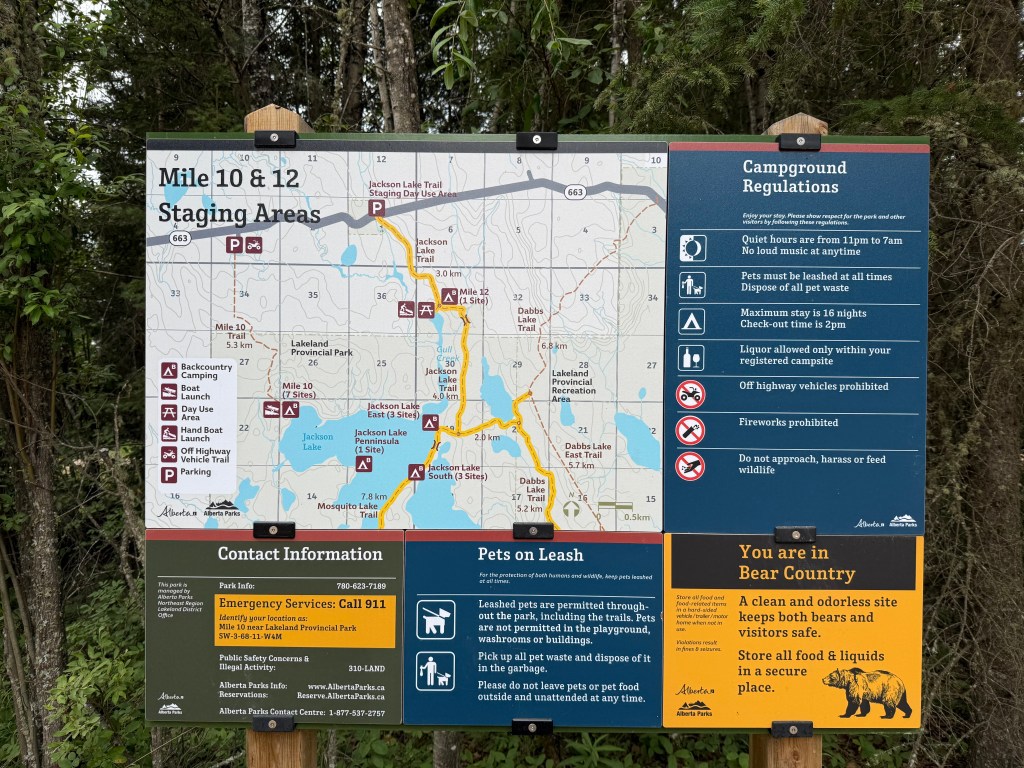
We launched from Jackson Lake on July 24 with four canoes, eight people, and high spirits. Our group included youth, dads, and one very energetic seventy-year-old. The portage trail from the parking lot to Jackson is a little shy of 4 km, but thanks to the excellent canoe carts provided, it was smooth sailing (or rolling, really). No complaints there.
Our first night was spent at the site adjacent to the Kinard-to-Blackett portage trail. We had a sudden downpour when we arrived in this little bay. Thankfully we got the tents and tarps up just before the sky opened up. The site left a bit to be desired. There was no bear cache or pole, which meant rigging up a food hang the old-fashioned way. Not ideal. It also appears that the portage trail here is undergoing major repairs. All the boardwalk has been pulled up, and both landings are a mess. We walked the trail that evening just to check it out—good thing we did. It’s currently essentially unpassable, and I managed to step on an upturned nail that punched through my discount Crocs. Fortunately, it was the blunt end and not the business end. A puncture wound would have been a trip-ender.
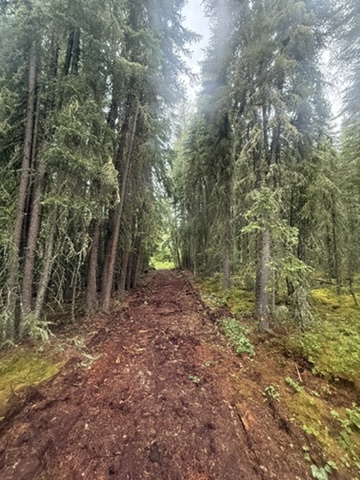
So, we opted instead to canoe the horseshoe route through Blackett Lake. It’s longer, but beautiful—and worth the paddle.
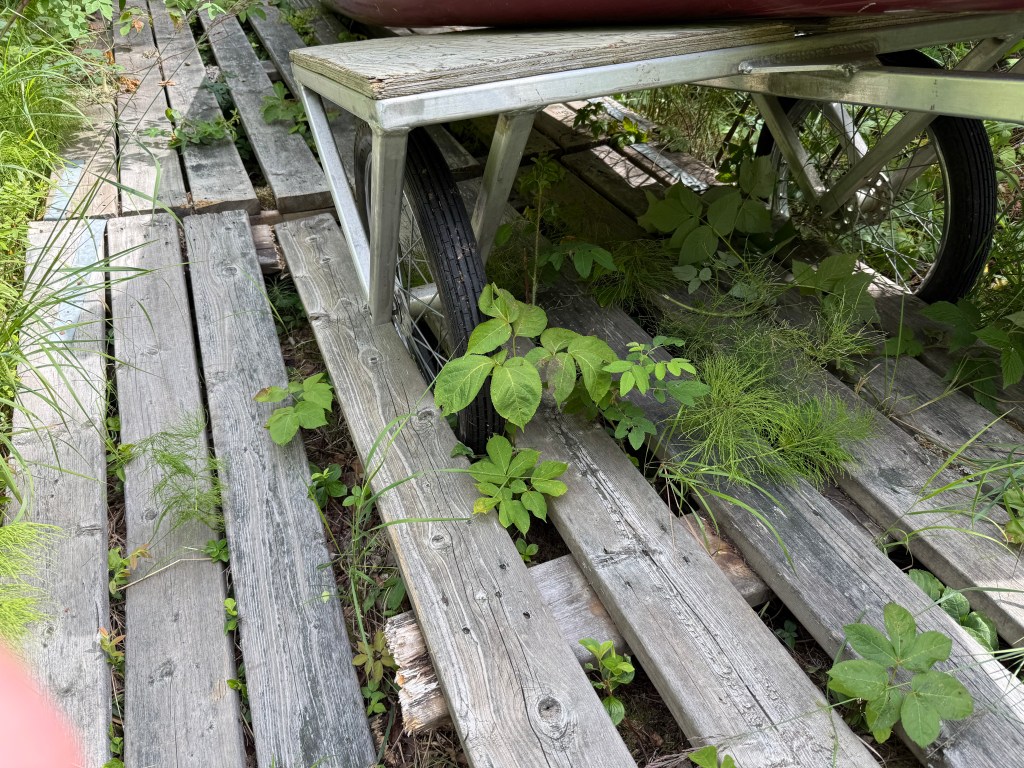
The portage from Blackett to McGuffin Lake (about 1.6 km) is technically doable, but a logistical headache. The boardwalk is in poor shape, with rotting planks and gaps exactly wide enough to trap canoe cart wheels. There are only two carts at this portage and, naturally, both were waiting at the far end while we stood with four canoes at the wrong one. We didn’t bring ratchet straps because the Jackson portage didn’t require them—rookie mistake. Add in a very awkward landing and takeout, and this became one of the least enjoyable portages I’ve done in recent memory.
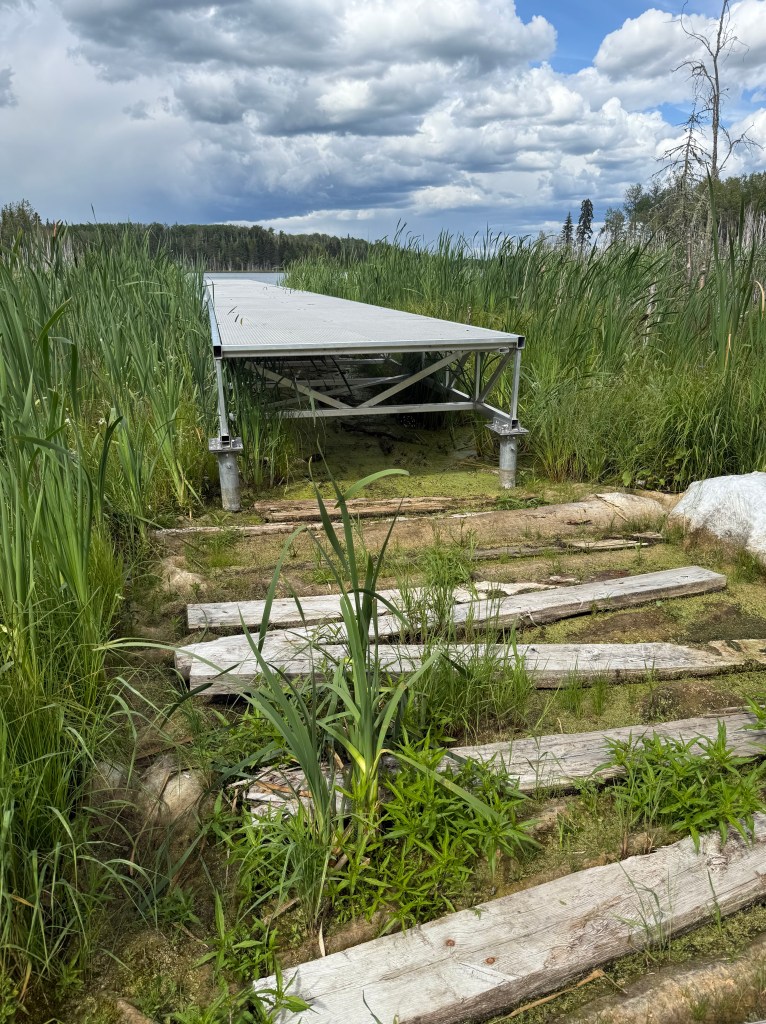
You’ll know you’re nearing the portage when you spot the shiny tin roof of a ranger’s cabin—a helpful landmark. At the McGuffin end, there’s a brand new dock, but it’s unfinished and not at all practical for canoeists. Lining canoes through cattails to reach a slick metal edge isn’t great. Doing it while supervising a group of youth? Zero stars. Do not recommend—at least until the work is done.
We stayed the second night at the only campsite on McGuffin Lake. Thankfully, this one did have a bear pole, but finding the site from the water was a headache. No signage, unclear maps, and lots of guessing. The new dock here is appreciated, but again, the landing is rough—some carved steps or basic grading would go a long way in making it accessible for older adults or younger kids – and us folk with bad backs.
The final portage from McGuffin to Jackson via a string of small lakes (Mosquito Lake might be one of them) was far better—smooth trail, well-marked, and even the beaver dams were fun obstacles instead of annoyances.
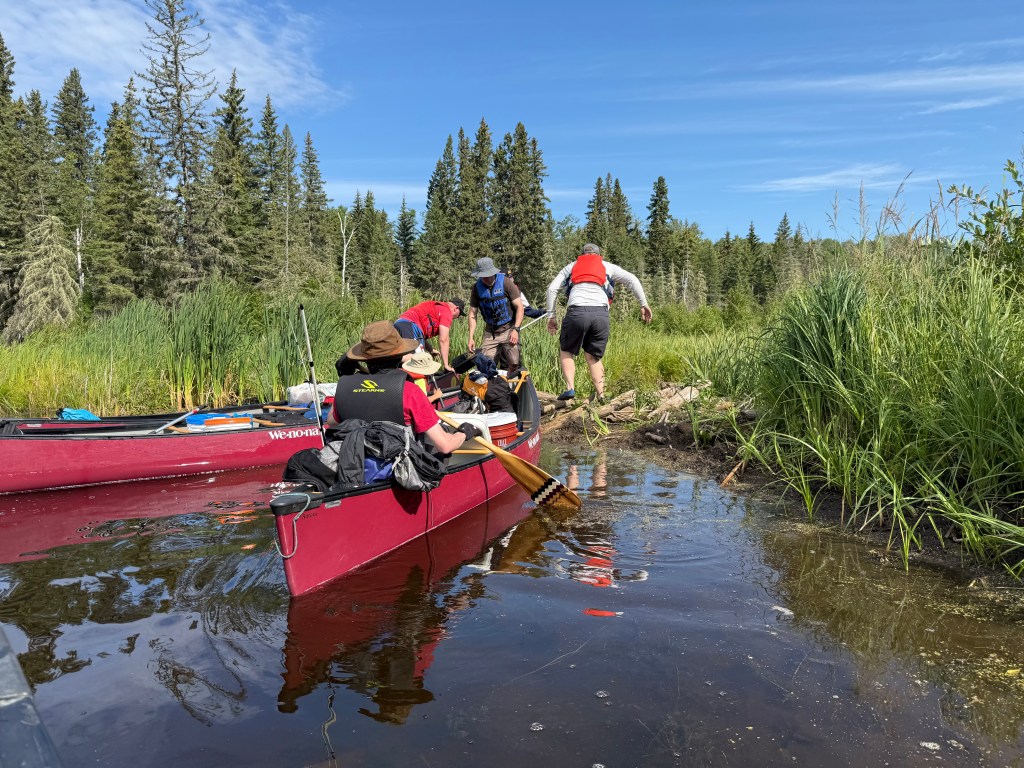
Despite the challenges, we had a fantastic time. One of the boys caught a good-sized Pike and a Walleye in Blackett, the weather was kind, and the company even better. I’m genuinely impressed with the new infrastructure going in—the docks, the ongoing trail work—and I look forward to returning once the upgrades are complete.
That said, a few suggestions for Alberta Parks:
- Bear caches or poles at every campsite, please.
- Finish the docks with proper landings.
- Fix those southern portages before someone gets hurt.
This is a gorgeous circuit with huge potential—and it’s already worth the trip for those willing to sweat a little.
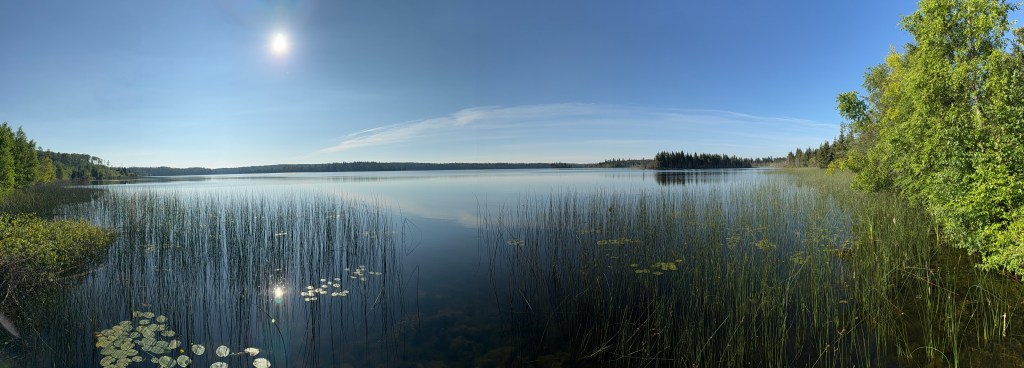
A view of McGuffin Lake in the morning (from its only campsite).
 MacAdventures.ca
Leave a comment