Let’s get straight to Bartlett’s journal for July 22 through 25.
Monday 22nd
We started at 6 AM for a long drive. The road was hard and gravelly. We stopped for a few moments at Willow Spring for a drink and rest, but there was no feed. We passed over Prospect Hill, where there were good springs on the east side. We camped at springs in a valley to the left of the road, 22 miles from the river. The feed was short and mingled with poisonous segoes.1 There was no wood, only sage. Three wagons from the valley were further down the valley. It was the first sighting of sage hens in flocks, and several were killed. The Texan Company camped nearby, with part of them heading to Oregon and part to the valley.
Tuesday 23rd
We started on time and had dinner at Greasewood Creek, where the feed was short as usual. The country between the Platte and Sweetwater Rivers is a barren, broken waste with no trees. It is one vast wasteland, broken only by a few craggy and crooked ravines and sand hills. We passed the Soda Lakes in the afternoon, which can be viewed by ascending a hill to the west. The lakes are scattered over a considerable extent, with thick incrustations of soda in some. Many of the company stopped to collect some. We camped on the Sweetwater, about 2 miles east of Independence Rock. The feed was good, but there was no wood. The water was very clear and pleasant to the taste.
Wednesday 24th
Brother Thomas and I visited Independence Rock ahead of the train. The station is 1 mile to the east. Independence Rock is an immense granite formation, about 600 by 120 yards, appearing as if it was upheaved from the earth. It bears the names of hundreds of visitors, some in large bold characters, others scarcely legible. From there, we went directly to Devils Gate, about 5 miles away, the greatest natural curiosity on the road. We passed through the rugged gateway, jumping from rock to rock, climbing over perpendicular sides of rugged boulders, and creeping under projecting cliffs. The stream through the pass is bold and rapid, rushing with frightful speed as if in terror of the rocks above. Its height is reported by different travelers to be between 300 and 400 feet. We had dinner at the west end of the Gate near Merchants Ranche. The feed was thick but short. We camped about 6 miles further on, with good feed but no wood. The station was just to the east.
Thursday 25th
We started at 3 PM after spending the forenoon on repairs. The camp is in a pleasant valley surrounded by hills about 8 miles away. There is no wood on this river, but sage and buffalo chips make a very good substitute. Some went to the mountains for pine and cedar, which grow wherever their roots can find earth in the recesses of the rock.
Running
I am really not keeping up with these Saints. I am getting ready for yet another ultra marathon. My feet have been in repair mode since Sinister 7. No big runs for me lately, but I am still getting out there. The Canadian Death Race is next weekend. I think I have one more big run in me. I’ll likely try a marathon distance this Saturday and then follow that with a very light week of short runs, long naps, and good food.
I don’t have much in the way of commentary on the saints travels. Although, it seems we have come to the Sweetwater River. I can’t help but think of another set of grandparents. In this case William’s in-laws, Seviah and Robert Egbert. Robert served in the Mormon Battalion and Seviah made the crossing to the valley herself. She received a special letter from Robert while on the trail that told her he would meet her at the Sweetwater River. He kept that promise and it was a miracle. I detailed that story in a blog post back in 2018, Refugee or Pioneer. I think it worth the read.
catch up
- Lakeland Circuit Review: Gorgeous, Gritty, and Worth It
- Running with the saints: days 56 to 73 and the end
- Canadian Death Race: enduring the suck with joy
- Running with the saints: days 52 to 55
- Running with the saints: days 41 to 51
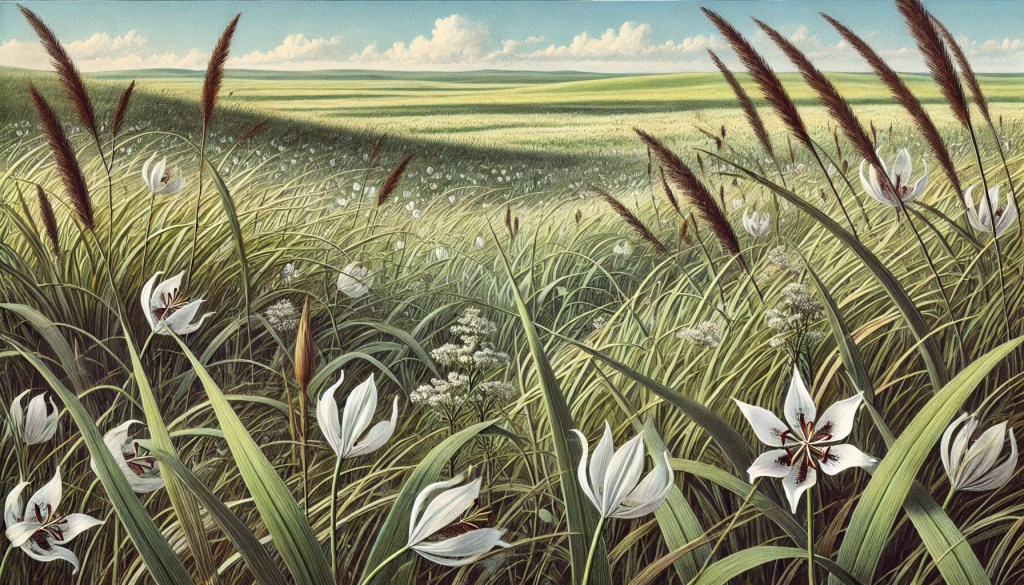
- According to our friendly AI, ChatGPT, “Poisonous segoes” likely refer to poisonous sego lilies or plants similar to them. The sego lily (Calochortus nuttallii) is a plant native to the western United States, known for its edible bulbs that were an important food source for Native Americans and early pioneers. However, not all plants that resemble sego lilies are safe to eat, and some could be toxic or harmful to livestock if ingested. In this context, the term “poisonous segoes” could be referring to plants in the area that are visually similar to sego lilies but are poisonous to the livestock grazing there. ↩︎
 MacAdventures.ca
Leave a comment