It has been an eventful 10 days. Ultimately, it has meant that I’ve not given this project the time it deserves. It is hot here in Alberta. I don’t have air conditioning and forest fires have popped up all around us. The air quality is terrible. Still, these are quaint hardships compared to those the saints are enduring. Over the last 10 days their cattle are dying from the rapid onset of some disease. ChatGPT suggests the most likely cause of death of their cattle is anthrax. Perhaps my farmer friends might know otherwise?
If only it were the cattle dying. The first entry here reports the death of Mr. Harrison’s son. When I read this account I pictured a man and wife laying to rest an infant. This would be tragic. It turns out the young son buried on the trail, July 11th at 11 pm, was just over 20 years old, Elisha Hyrum Harrison. Somehow, this seems far more tragic. Elisha was the oldest son of Isaac Harrison. He was preceded in death by his mother and possibly one sibling. It appears that Mr. Isaac Harrison was travelling with the company as their chaplain and that his son Elisha was the only other family member on this crossing. I can only imagine the agony of burying a son in the wilderness, and then carrying that news home to his siblings and step-mother. A picture of weeping parents over the wilderness gravesite of an infant elicits feelings of sorrow. The image of a lone father burying a son at midnight in the wilderness, a son that was likely, in his person, the personification of twenty years of a father’s hope and dreams, is something more raw and visceral than I can express.
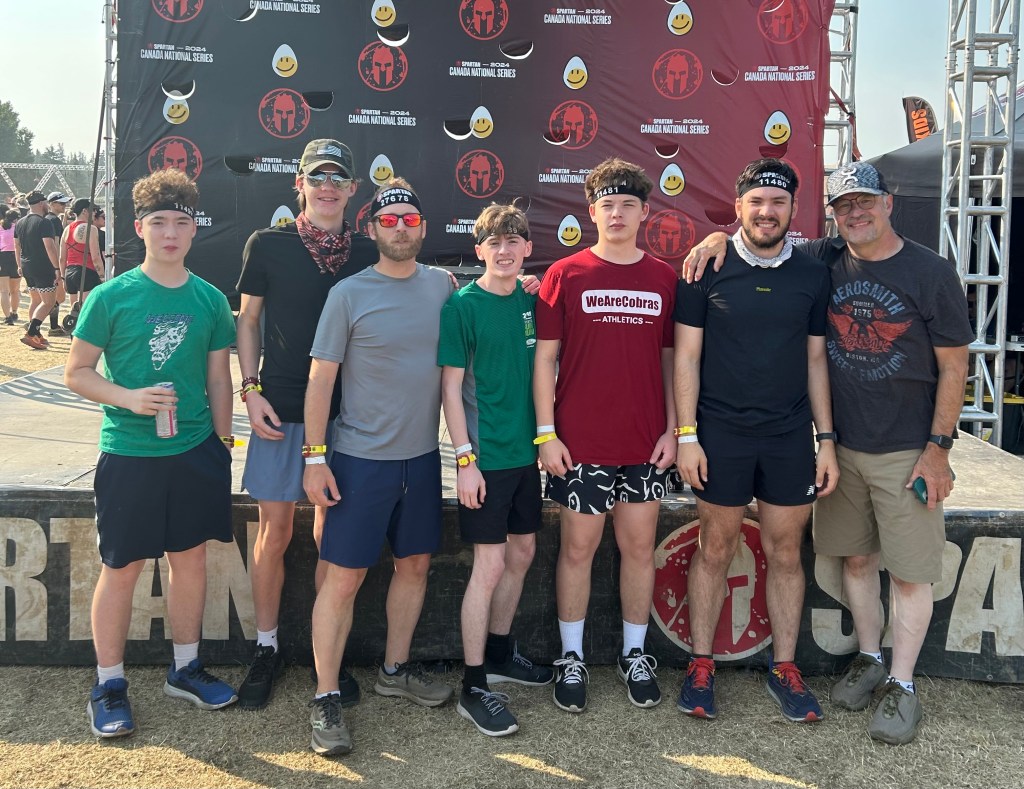
I continue to run and to fall behind the saints. I ran a 10k Spartan race with my own son on Saturday. And, in case you missed it, I made a valiant attempt at the Sinister 7, 100-mile ultra marathon on the Saturday before that. I maintain that running, like life, is best done in the company of loved ones.
Let’s see what Bartlett has to say about these last 10 days.
Thursday 11th
Mr. Harrison’s son is dying. The camp stayed put for the day, and he passed away around 11 P.M., likely from a liver disease. The blacksmith’s shop was busy throughout the day.
Friday 12th
The camp didn’t leave until 10 A.M. due to some missing cattle. After paying last respects at young Harrison’s grave, the camp moved on through very hilly and rough terrain, breaking several wagons. These hills, known as the Black Hills, are covered with scraggy pines, giving them a black appearance. The camp settled on the Platte, 12 miles from the previous location, with the 1st Company camped just above.
Saturday 13th
Our company passed the other, which was delayed by missing cattle. The road was hilly but mostly hard and firm, with fewer rocks than the previous day. We spent a few moments at Alder Clump, meeting some returning Californians. There was a fine spring and short green grass. The camp settled on a fine spring creek about 3 miles from Alder Clump with good feed and excellent water.
Sunday 14th
The roads were good, crossing several dry creeks. We encountered a trader near a creek with water. The camp settled on the Platte, 16 miles from the last camp, near some ranches with a cold spring on the riverbank. Feed was short on our side but good on the opposite side where we herded our stock. The landscape was generally barren and broken, with sand and sage, and feed only along the creek and riverbanks.
Monday 15th
We moved out ahead of the 1st Company, which was slow in gathering their stock. The road had some hills but was mostly hard and good. We had lunch on the Platte, just west of a dry creek, where we found excellent wild currants. Mrs. Hannah Thorpe was run over and badly hurt. The camp settled at 7:30 on the Platte, 15 miles from the previous camp. There was no feed on our side, but the cattle were too tired to swim the river, so we herded them near the camp.
Tuesday 16th
We drove the stock over the river early, finding good feed. The camp moved out at 8, passing the Old Mormon Ford and ascending some very bad hills, including the Winding Ridge. We camped on the bottom where the road leaves the bluffs, with the 1st Company just above us. Mr. Cornwell lost two cattle, likely to murrain. The cattle were driven across the river for good feed.
Wednesday 17th
The camp started late due to several sick cattle. Mr. Barzee and Mr. Cummings each lost an ox to a disease that caused drooping ears, blood running from the nose, and quick death. We had lunch on the Platte, 8 miles from the previous camp, then forded the river. The north shore was rocky, and the south shore was sandy. The ford was good, not reaching the wagon beds and with a mild current. The camp settled on the south side, 1 mile from the ford, with good feed. Several members were sick with mountain fever.
Thursday 18th
Three more cattle died from the disease. We passed Box Elder Creek, 1.5 miles away, and had lunch 3 miles east of Deer Creek. The camp settled 4 miles west of Deer Creek, with better feed. Deer Creek had several log houses, a store, and a station. There was a ferry across the river. The two camps reunited near Deer Creek.
Friday 19th
The camp left at 10, waiting for Mr. Wilcox, who was behind with his sick daughter. Another ox died, and the cattle were bled as a potential remedy. The camp settled at 3:30 P.M. on a bend of the Platte near a station. There was a fine time shooting geese, with 10 killed for food. The sick in camp were improving as they approached the mountains, where the air and water were clearer.
Saturday 20th
The camp left at 9, delayed by cattle crossing the river. The Allred camp, which had been nearby, was now just ahead. The bluffs on this side were steep and high, covered with pine trees that appeared small from a distance. The camp settled at 3 P.M., 1 mile east of the upper Platte Bridge.
Sunday 21st
The camp started late. Mr. Wilcox remained behind with his daughter, who was too weak to travel, and Mr. Cummings stayed with him. We crossed a finely constructed bridge made of pine, costing $60,000. The Allred Company assisted Mr. Wilcox at the north end of the bridge. The camp settled near the next station, about 12 miles away, with a mineral spring and scarce feed. Cattle were herded at a distance up the creek. We passed a Texan camp a mile below us.
catch up
- Lakeland Circuit Review: Gorgeous, Gritty, and Worth It
- Running with the saints: days 56 to 73 and the end
- Canadian Death Race: enduring the suck with joy
- Running with the saints: days 52 to 55
- Running with the saints: days 41 to 51

 MacAdventures.ca
Leave a comment